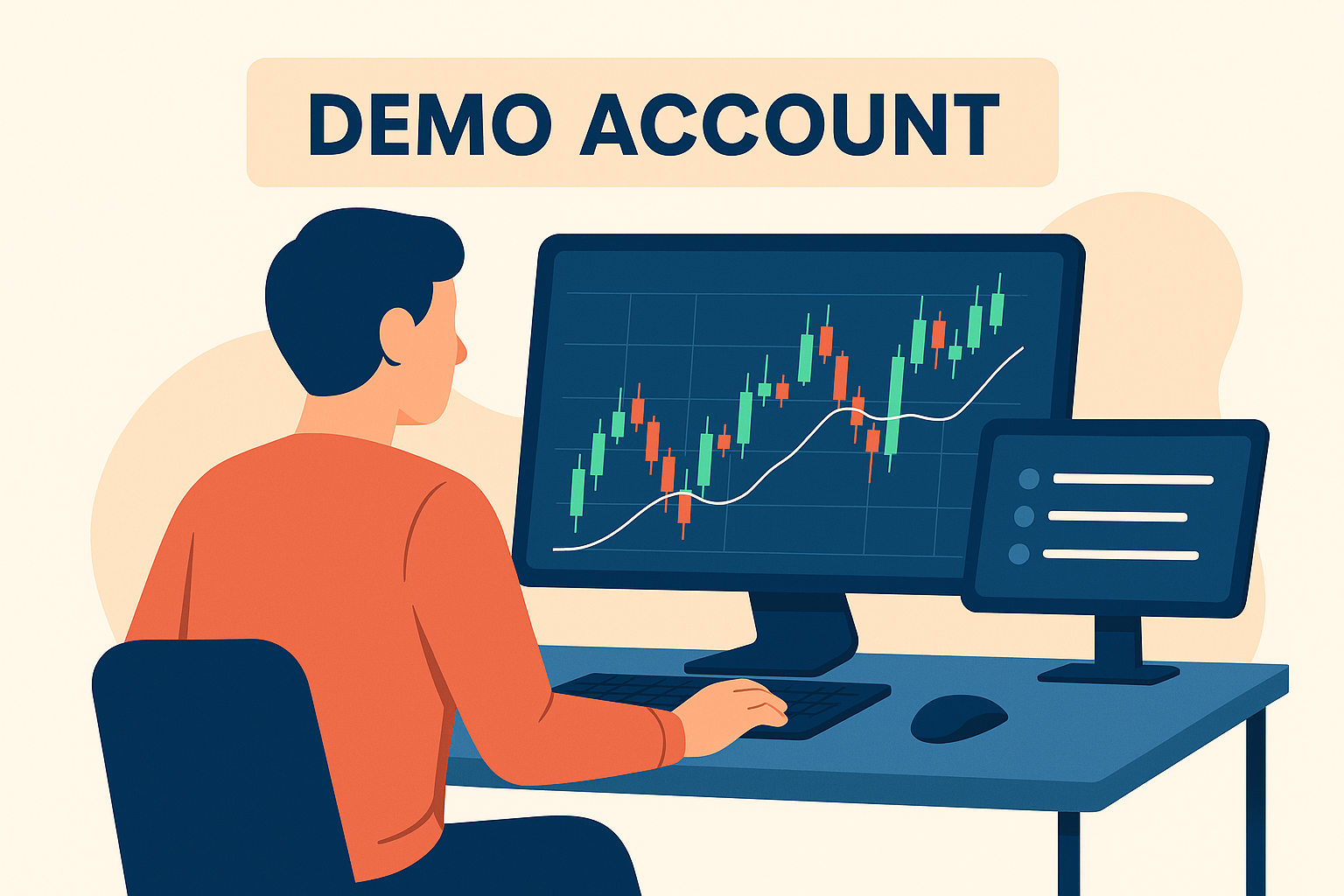
If you’re new to trading, a demo account is your best starting point. It’s like flight simulation for pilots—you get to experience the markets without risking real money. This guide walks you through how to set up and make the most of your demo trading account for forex and crypto.
What Is a Demo Account?
A demo account is a practice trading account offered by most brokers. It replicates real-market conditions but uses virtual funds.
Why it’s important for beginners:
- Zero financial risk
- Real-time trading experience
- Learn platforms and tools
- Build confidence and strategies
📘 Tip: Treat demo trading like real trading—your habits will carry over.
Demo accounts are especially useful in volatile markets like crypto, where price swings can test emotional control. Practicing without fear of loss allows you to train your brain for high-pressure decisions.
How to Set Up a Demo Account
- Choose a Broker: Select a regulated forex or crypto broker that offers demo accounts (e.g., MetaTrader 4/5, Binance, TradingView).
- Sign Up: Create an account and choose the demo option.
- Select Account Settings: Set initial balance, leverage, and base currency. Match your demo account to what you’d realistically fund in a live account.
- Download the Platform: Install desktop or mobile trading software.
- Start Trading: Explore platform features, place demo trades, and use charting tools.
🔐 Security note: Even demo accounts may require personal data—always choose trusted platforms with strong privacy policies.
What to Practice with a Demo Account
Use this phase to explore, test, and develop trading discipline.
1. Platform Navigation
- Open, modify, and close trades
- Set stop-loss and take-profit orders
- Use drawing tools and place alerts
Mastering the platform reduces errors when real money is involved.
2. Strategy Testing
- Try technical strategies like moving average crossovers, RSI signals, or Bollinger Band bounces
- Test fundamental reaction trades (e.g., trading on CPI or interest rate decisions)
- Compare outcomes of trend vs range-based strategies
📈 Helpful habit: Journal each trade’s rationale and outcome.
3. Risk Management
- Calculate position sizes using fixed % risk (e.g., 1–2% of your capital)
- Use a risk/reward ratio of at least 1:2
- Learn how different lot sizes affect pip value and account exposure
🧠 Mindset tip: Focus on process, not profit. Success is consistency over time.
Common Mistakes to Avoid in Demo Trading
- Overtrading: The lack of real risk can make it tempting to open too many trades.
- Ignoring Risk Parameters: Don’t skip stop-loss or use unrealistic leverage.
- Setting an Unrealistic Balance: If you plan to go live with $500, don’t set your demo account at $100,000.
- Treating It Like a Game: Simulating real emotions and discipline is critical to transitioning smoothly.
⚠️ Warning: A demo account is a tool, not a toy. Respect it like you would your future capital.
When to Move from Demo to Live Trading
Ask yourself:
- Are you consistently profitable across different market conditions?
- Have you experienced losing streaks and adapted?
- Are you following a structured trading plan?
- Do you manage risk instinctively?
If yes, consider starting with a small live account.
🎯 Next step: Use a micro lot size to limit risk while gaining emotional experience.
🧪 Bonus tip: Run your live trades alongside a demo to test new ideas risk-free.
Benefits of Ongoing Demo Use
Even after going live, demo accounts are invaluable:
- Strategy Development: Safely test new entry/exit rules or indicators
- Market Familiarization: Try out unfamiliar pairs or altcoins
- Platform Practice: Learn new tools or features without mistakes
- Psychology Training: Reset your emotions and regain control after tough live sessions
💡 Pro tip: Many pros maintain a “shadow account” in demo to tweak methods or backtest concepts.
Bonus: Tools to Use with Your Demo Account
Maximize your practice time with these free or affordable tools:
- TradingView: Great for multi-asset charting and alerts
- MyFxBook / FX Blue: Track performance metrics and trade history
- AITradingSignals.co: Get AI-curated trade setups to test strategies
- Position size calculators: Automatically calculate lot size based on risk
📚 Helpful link: Indicators101 Strategy Hub – Explore ready-to-test demo strategies.
Final Thoughts: Demo First, Profit Later
Trading with a demo account is the best way to build real skill without real risk. Use this phase to explore platforms, test strategies, and build confidence. Combine your learning with smart tools like AITradingSignals.co to gain an extra edge.
Your goal isn’t to win every trade—it’s to build repeatable habits that serve you when real money is on the line. And remember: Consistency and discipline in demo translate to performance in live trading.
So go ahead—open that demo account, log those trades, and train like you mean it.