Key Takeaways
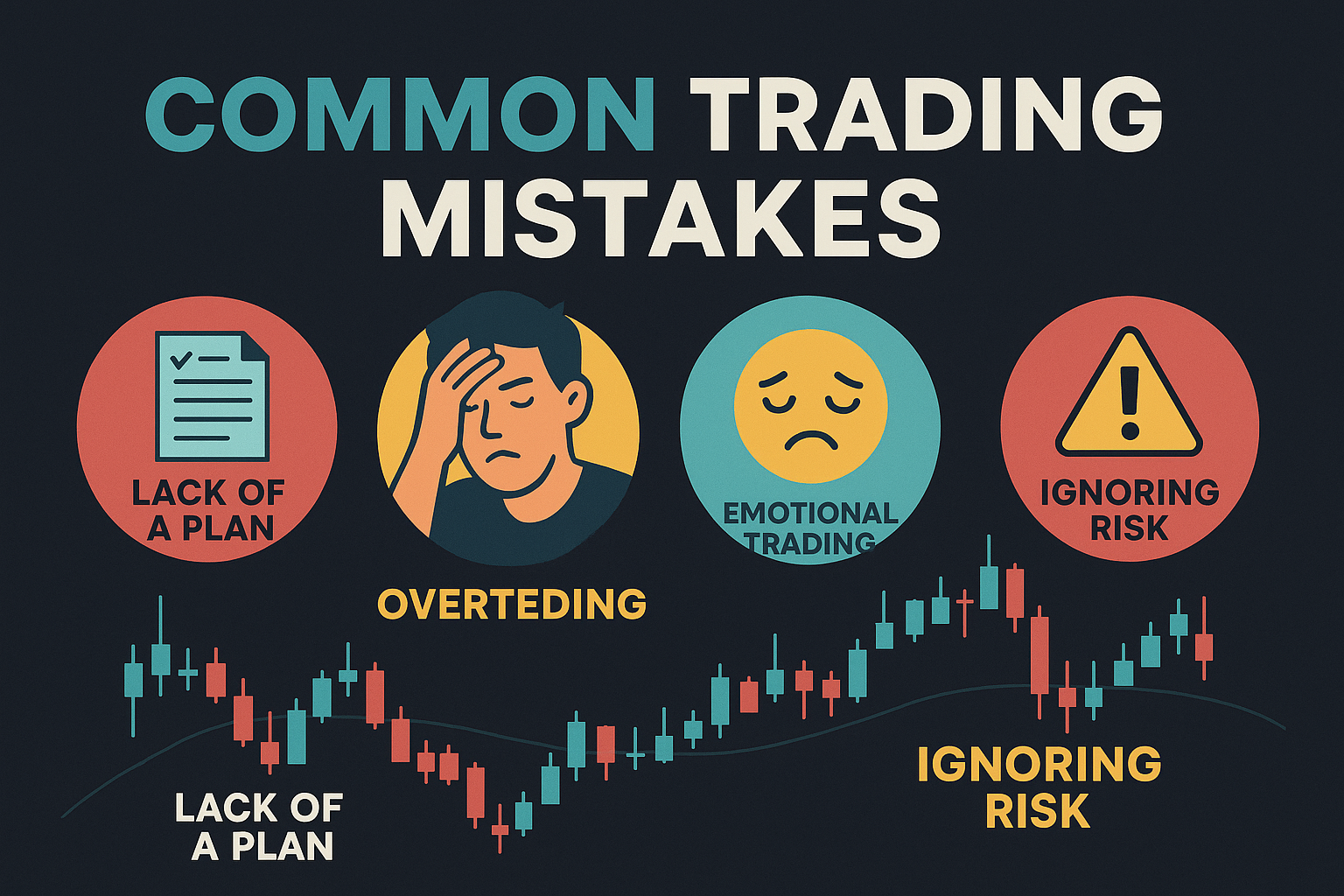
- Most beginner losses trace back to no plan, poor risk management, and emotional decisions.
- A simple, rules-based process (manual or algorithmic) beats gut feel.
- You don’t need to predict the market—you need to control risk, size positions, and execute your edge.
- AI trading can enforce discipline, but it’s not “set and forget.” Understand the logic, monitor results, and iterate.
Trading the forex and crypto markets is exciting—and fast. That speed can tempt beginners into decisions that feel right in the moment but add up to consistent losses. The good news? Most mistakes are predictable and fixable. In this guide, you’ll learn the ten biggest pitfalls, how to spot them, and step‑by‑step ways to correct the course. Wherever helpful, we show how algorithmic trading and AI trading tools can reduce errors and help you follow your rules.
Use this article like a checklist. If a section stings a little, that’s your edge to improve.
1) Trading Without a Written Plan
The mistake: Jumping in without clear entry/exit criteria, risk limits, or review cadence. When conditions change, emotions take over.
Symptoms: Inconsistent entries, moving stops after entry, “winging it,” or not knowing why a trade was taken.
Fix:
- Write a one‑page plan: market(s), timeframes, signal rules, position sizing, entry/exit, max risk/day and week.
- Define setups with screenshots. If you can’t screenshot it, you can’t code it—and you probably can’t repeat it.
- Schedule a weekly review (win rate, average R multiple, max drawdown, rule breaches).
AI/Algo angle: Convert rules into a TradingView Pine or MetaTrader script. Algorithms don’t forget rules. If you can’t translate the rule, it’s probably too vague.
Template: 1‑Page Trading Plan (Google Doc)
2) Ignoring Risk Management
The mistake: Oversized positions, skipped stop‑losses, or adding to losers. A few outsized losses erase months of gains.
Core rules that save accounts:
- Risk 0.5%–2% of equity per trade (pick a number and stick to it).
- Place stops where the setup is invalidated, not where the loss “feels okay.”
- Use a daily/weekly max loss (e.g., 3R/day) to avoid spiral days.
Quick position sizing formula: Position size = (Account * Risk%) / (Entry – Stop distance) (adjust for pip value / contract size).
AI/Algo angle: Code risk guards: max concurrent exposure, per‑symbol limits, and daily circuit breakers that halt the bot after a threshold.
Read next: How to Set Stop‑Loss & Take‑Profit in Forex
3) Overtrading
The mistake: Taking too many marginal setups—often boredom, revenge trading, or FOMO.
Fix:
- Define A‑setups only for live trading; log B/C setups to paper trade.
- Impose a daily trade cap (e.g., 3–5 trades) and a cool‑down timer after a loss.
- Track a metric: Trades per day vs. expectancy. You’ll see fewer, higher‑quality trades win.
AI/Algo angle: Bots can throttle signals (e.g., “max 1 trade per hour,” “no trades 5 minutes before major news”).
4) Neglecting Market Education
The mistake: Treating trading like gambling—no understanding of trend structure, volatility, or macro drivers.
Fix:
- Learn price action basics (trend, range, breakouts, pullbacks) and risk math (expectancy, R multiple, drawdown).
- Practice on higher‑timeframes first; signal‑to‑noise improves.
- Use a structured path: beginner primer → one strategy → backtest → small live size → incremental scaling.
Helpful resources:
- Indicators101: Beginner’s Guide to Algorithmic Trading
- TradingView Education
- Babypips School of Pipsology
5) Blindly Following Signals or Influencers
The mistake: Copying trades with no context. If they vanish—or markets change—you’re lost.
Fix:
- Demand transparency: strategy logic, backtest period, out‑of‑sample results, and live stats.
- Backtest independently (same rules, same data). Validate slippage and fees.
- Start with micros or demo while you monitor variance.
AI/Algo angle: Build simple signal aggregators that only trade when multiple conditions align (trend + momentum + volatility filter). This dilutes single‑source risk.
6) Disregarding News & Economic Events
The mistake: Holding through high‑impact releases (FOMC, CPI, NFP) or crypto‑specific events (protocol upgrades, ETF decisions) without a plan.
Fix:
- Use an economic calendar with alerts (30/10/5 minutes before). Stand aside or reduce size.
- Add volatility filters (e.g., ATR widening) to avoid trading right after a spike.
- For crypto, track network status and major governance proposals.
AI/Algo angle: Integrate news “quiet periods” into your code or use a provider that tags high‑impact windows.
Tools:
7) Skipping Backtesting & Forward Testing
The mistake: Going live based on a handful of screenshots or a hunch.
Fix (3‑step validation):
- Backtest across multiple years and regimes.
- Walk‑forward/forward test on unseen data.
- Paper trade or tiny size for 2–6 weeks before scaling.
Quality checks:
- Expectancy > 0, reasonable profit factor (e.g., >1.2), tolerable max drawdown relative to your risk.
- Robustness: works on more than one instrument/timeframe with minor tweaks.
AI/Algo angle: Use walk‑forward optimization and Monte Carlo to understand variance. AI models can overfit—require out‑of‑sample proof.
Platforms: MetaTrader, TradingView, QuantConnect, Amibroker.
8) Chasing the Market (FOMO)
The mistake: Late entries after large moves; panic exits at the worst level.
Fix:
- Pre‑plan: “If price does X, I do Y.”
- Use limit orders at planned pullback levels; avoid market orders during spikes.
- Record every FOMO trade in a separate log. The pattern will become obvious—and fixable.
AI/Algo angle: Program entries that require both signal + confirmation (e.g., retest + volume or volatility normalization) to avoid chasing.
9) Unrealistic Expectations
The mistake: Expecting to double accounts quickly; ignoring drawdowns; equating activity with income.
Reality check: Even strong strategies face losing weeks or months. Consistency comes from risk control, not hero trades.
Fix:
- Define acceptable weekly/monthly variance before you trade.
- Measure progress by process metrics (rules followed, risk respected) before P&L.
- Aim for steady compounding; let the math work.
AI/Algo angle: Dashboards that show equity curve vs. plan help you stick to realistic targets and avoid random adjustments.
10) Ignoring Psychology & Discipline
The mistake: Trading tired, stressed, or angry; abandoning rules after a few losses or wins.
Fix:
- Keep a trading journal (template below). Note emotions before/after each trade.
- Use pre‑trade checklists and post‑trade scorecards (Did I follow entries? position size? stop discipline?).
- Add environmental rules: no trading after 3 consecutive losses; mandatory break after a big win/loss.
AI/Algo angle: Automate rule enforcement (halt after 3 losses, lockout during low‑liquidity hours, etc.).
Bonus: Misusing AI Trading Tools
The mistake: Treating bots as black boxes, over‑optimizing, or running too many uncorrelated strategies at once.
Fix:
- Document each bot: edge hypothesis, inputs, risk settings, and when it shouldn’t trade.
- Start with one strategy, diversify gradually, and monitor correlation across bots.
- Review monthly: performance by market regime; disable or adjust underperformers.
Pros & Cons of AI/Algorithmic Trading
- Pros: Discipline, speed, backtestability, 24/7 execution (crypto), multi‑market coverage.
- Cons: Overfitting risk, data/latency issues, black‑box complacency, and operational risk (downtime, API limits).
Practical Tools & Templates
A) Risk Management Mini‑Plan
- Account size: $____
- Per‑trade risk: ____% (0.5–2%)
- Max daily loss: ____R (e.g., 3R)
- Max weekly loss: ____R
- Position sizing method: (fixed fractional / volatility‑based / Kelly‑fraction)
- Stops: rule + example
- Correlated exposure cap: e.g., max 2 positions long USD at once
B) Trading Journal Template
Use the following fields for each trade (no tables needed):
- Date/Time:
- Instrument (Pair/Coin):
- Setup Code/Name:
- Entry Price:
- Stop Price:
- Target(s):
- Position Size (Units or Contracts):
- Planned Risk (R):
- Actual Result (R):
- Pre‑Trade Notes (bias, emotions, context):
- Post‑Trade Review (rule adherence, improvements):
C) Backtest Quality Checklist
- Tested across bull/bear/range regimes.
- Includes fees, slippage, and realistic order types.
- Avoids peeking and look‑ahead bias.
- Has out‑of‑sample and forward tests.
Realistic Examples
Example 1: EURUSD Pullback Strategy (Manual or Algo)
- Idea: Trade pullbacks in a clear trend using a 20/50 EMA with ATR‑based stops.
- Rules: Enter on pullback to 20 EMA with bullish/bearish candle confirmation; stop = 1.5×ATR; risk 1% per trade; take profit at 2R; trail remainder.
- What beginners do wrong: Enter every crossover, skip stops, or average down.
- Better: Wait for the retest; pre‑define targets; log every trade.
Example 2: BTC Breakout With Volatility Filter
- Idea: Trade breakouts only when volatility contracts first.
- Rules: Entry on break of NR7/NR20 range; trade only if ATR% < 20>
- AI assist: Code filters to avoid trading during major protocol news or right after funding spikes.
Frequently Asked Questions
What are the top 3 beginner mistakes?
No written plan, weak risk management, and emotional overtrading.
How can I avoid overtrading in forex?
Use A‑setup rules, a daily trade cap, and a cool‑down after losses. Consider an algorithmic trading throttle to limit frequency.
Is AI trading safe for beginners?
It can help—if you understand the strategy, cap risk, and monitor results. Avoid black boxes.
How big should my first position be?
Pick a fixed risk (e.g., 1% of account per trade) and calculate size from your stop distance. Consistency > aggressiveness.
What’s a healthy win rate?
There’s no magic number. Systems with 35–45% win rate can be profitable if winners are larger than losers (e.g., average win 2R, average loss 1R).
When should I stop trading for the day?
If you hit your max loss, break your rules, or feel tilted. Protect your mental capital.
Should I diversify across many bots?
Only after each one shows a documented edge. Track correlation so multiple bots don’t lose together.
Quick Glossary (Beginner Friendly)
- R multiple: Profit or loss measured in units of risk (your stop distance). Useful for comparing trades.
- Expectancy: Average R per trade over a series. Positive expectancy = edge.
- ATR: Average True Range; a volatility measure often used for stops and filters.
- Drawdown: Peak‑to‑trough equity decline. Plan for it before it happens.
Summary & Next Steps
You don’t need perfect predictions to succeed. You need a repeatable edge, strict risk management, and consistent execution. Start with a one‑page plan, backtest it, forward test it, then let algorithmic trading or AI trading tools help you apply the rules without hesitation.
Continue learning:
- Beginner’s Guide to Algorithmic Trading (Indicators101)
- Risk Management 101: Position Sizing for Forex & Crypto
- How to Build & Backtest a Strategy in TradingView
Call to Action: Ready to put this into practice?
Give our Indicators a try at AITradingSignals.co to supercharge your entries and risk management. Prefer a guided path? Check out our courses at aitradingsignals.gumroad.com for step‑by‑step playbooks, backtesting labs, and risk templates.
Compliance & Disclaimer: This educational content is for information only and is not investment advice or an offer to buy/sell any asset. Trading involves risk. Past performance does not guarantee future results. Always do your own research and consider consulting a licensed professional. Ensure any images or charts you use are properly licensed or created by you.